Showing posts with label Landing Gear. Show all posts
Saturday, June 4, 2016
Fuselage is out of the Attic - After 10 Years
After taking off the cowling and horizontal tail surfaces the first big task was to remove the engine. I used the come-along on my slider tubes, from earlier, to hold it while removing the firewall bolts. I then bolted 2x4s to the back of the engine mount and slowly lowered the engine to a cart.
We've got to carry it down the steps so I added a stiffener to prevent accidentally bending the engine mount.
We'll carry it down after we rest up from moving the fuselage. All these things seemed much lighter 10 years ago when our son Wade and I carried them up the steps.
When we carried the fuselage up the firewall was not on and it was easy to hold the front of the fuselage. I made up some handles from 1" conduit to make it easier to lift the front end going down the steps.
The gear is off. It's setting on a small saw horse and suspended from the ceiling so we don't damage anything until we can move it.
After 3 weeks of rain we had an afternoon when my neighbor Dan was available to help move the fuselage. We slid it out onto the porch railing with some rugs to pad the railing
With the tail wheel on, the tail is the heavy end despite how much is hanging over the railing. Because I built the house with 10 foot ceilings on the first floor the deck railing is 15 feet above the ground. You just need faith it won't fall.
With the tail finally clear of the door we could slide it back. Then we had to slide the fuselage to the left to get it aligned with the stairs.
Once it was lined up we could lift the tail over the railing.
We slowly slid it to the edge of the railing so Dan could use the handles to lift the nose off the rail and start down the steps.
Dan really had the heavy awkward end coming down the steps and kept urging me to hurry. We just had to go slow and easy as we each moved down a step and made sure we had a good footing before taking the next step.
On the ground it was back onto the small saw horse while we positioned the gear under the fuselage.
Muscle man Dan Doing the lifting while Patricia and I put the gear bolts back in.
It's out of the attic and on the gear.
I think it's time to put this thing back together.
Sunday, March 27, 2016
2008 - Struts and Brakes
The landing gear axle and all the fittings were removed from the landing gear and wing struts. The metal parts were sand blasted, Zinc Chromate primed and painted with Black enamel. The wooden struts were sanded to remove the old varnish and re-varnished with Marine Spar Varnish. The fittings were then reinstalled with new hardware.
The landing gear was assembled and bolted back on the fuselage. The landing gear bracing cables take a lot of abuse. New 1/8" 1 x 19 cable replaced all the old. I used the same method we used originally which was 2 Nicopress sleeves. The first takes the structural loads. The second just covers the loose end of the cable to prevent snags. For the second sleeve have the cable installed and rigged tight. Make the 3 crimps starting with the end toward the first sleeve and work down the cable
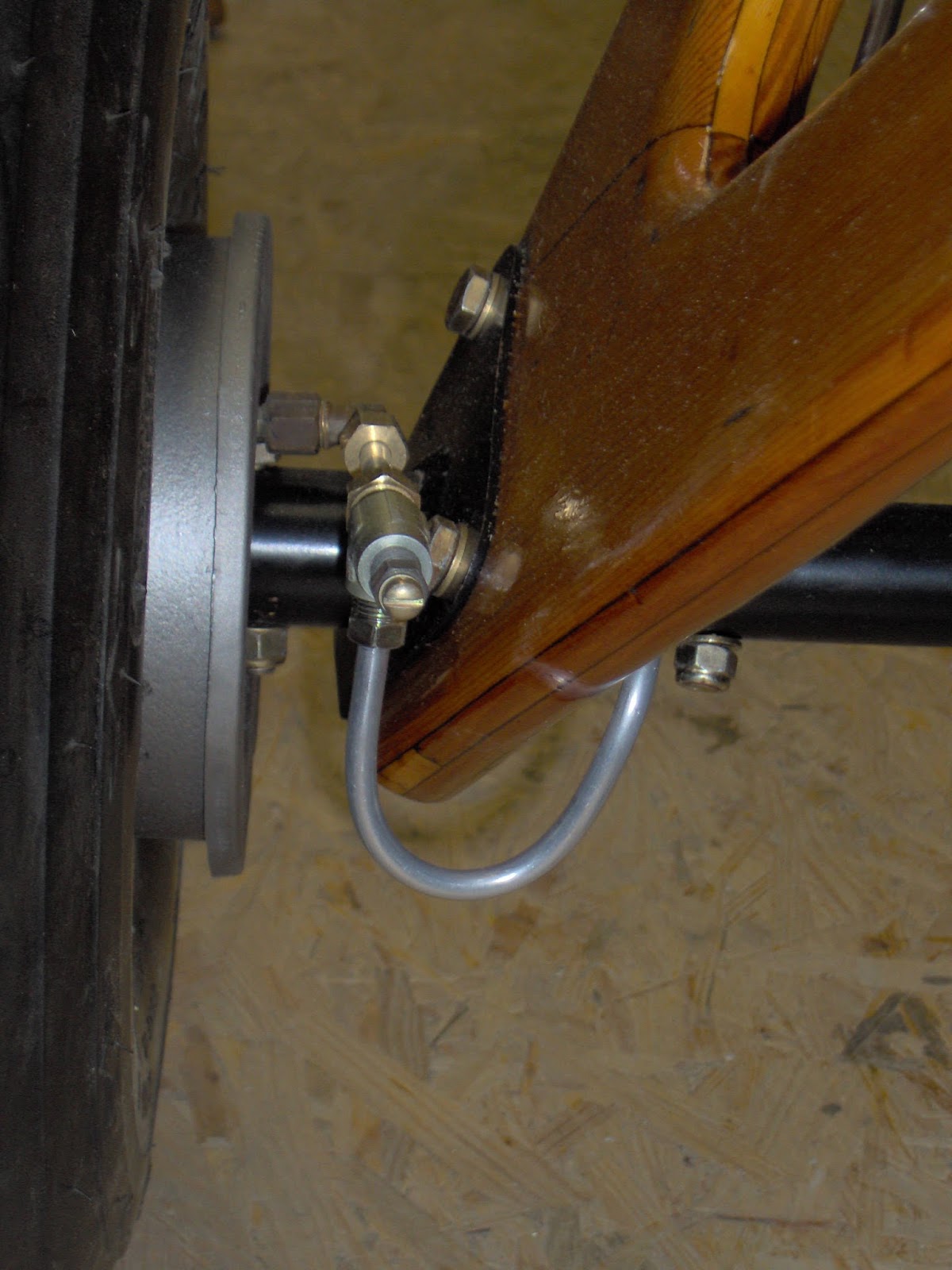
Originally we ran the brake tubes along the front of the gear strut. They really get beat up in front. I decided to move them to the back and inboard corner of the struts. That meant reversing all the fittings from the CUB brakes to turn aft.
I then routed the lines out of the bleeders and around the back of the struts. There is no hose because the gear is rigid.
I liked the use of cotton twine to hold the brake lines to the struts. The twine was varnished after tying it tight.
Because I'm working in my attic I wanted the gear easily removed. A union was added in the fuselage where it wouldn't snag moving the fuselage down the steps. From the union it's a short line to the CUB heal brake cylinder.
The landing gear was assembled and bolted back on the fuselage. The landing gear bracing cables take a lot of abuse. New 1/8" 1 x 19 cable replaced all the old. I used the same method we used originally which was 2 Nicopress sleeves. The first takes the structural loads. The second just covers the loose end of the cable to prevent snags. For the second sleeve have the cable installed and rigged tight. Make the 3 crimps starting with the end toward the first sleeve and work down the cable
Originally we ran the brake tubes along the front of the gear strut. They really get beat up in front. I decided to move them to the back and inboard corner of the struts. That meant reversing all the fittings from the CUB brakes to turn aft.
I then routed the lines out of the bleeders and around the back of the struts. There is no hose because the gear is rigid.
I liked the use of cotton twine to hold the brake lines to the struts. The twine was varnished after tying it tight.
Because I'm working in my attic I wanted the gear easily removed. A union was added in the fuselage where it wouldn't snag moving the fuselage down the steps. From the union it's a short line to the CUB heal brake cylinder.
Sunday, November 8, 2015
1967 - Ups & Downs
At the start of 1967 the Fly Baby had accumulated 6 hours 15 minutes. Neither Ernie nor Dennis had flown the plane yet. Ernie got his first flight on May 6.
In April we finished the repairs to a Taylorcraft L2-M, N47469, which Ernie bought for $125. We each got to fly it April 5th. It wasn't much of a performer but it flew and gave us some tail wheel practice before flying the Fly Baby. Dennis put 12 hours on the T-craft that year despite spending the summer working in the Upper Peninsula of Michigan.
A hard landing in the Fly Baby pointed out a problem we had caused by using 700x6 wheels instead of the 800x4 wheels like Pete used. There is no shock absorption in the smaller, higher pressure 700x6 tires. As a result the axle bent.
Fortunately the wood gear legs are very strong and did not break.
Another factor which made it easier for the axle to bend was the position of the steel bar in the center of the axle. It provides an attachment for the wing flying wires. The drawing for it is not clear enough as to orientation. The bar should be nearly vertical so the load on each end of the shackle would be equal. The center line of the pin through the shackle should be about parallel to the bottom of the wing, which make the bare nearly vertical. With the bar vertical it helps stiffen the axle.
The lower image in Figure 2-5 make it look like the bar is parallel to the wing and the pin vertical. A side view of the bar and axle would have made this clearer.
A new gear was quickly built but it was much later that we found the bar was installed wrong. We were lucky the shackle didn't fail. We were able to leave the bar and make some plates to replace the shackle. The bar is still in the wrong position. If I get around to putting the Monoplane wings back on I'll replace the axle to turn the bar vertical.
The plane is back at Dalton airport near Flushing, Michigan for the annual Dawn Patrol with 800x4 wheels and tires.
We know who 2 of the 3 people looking at the plane are. The person facing the camera, wearing a ball cap, is Howard Nixon of Cheasining. Howard built a Smith Miniplane, N66N. The person with his back to the camera is Ray Shelby. Ray built a Baby Ace in a small cottage a few miles from Dalton.
Fly baby heading out for another flight.
On August 10th Ernie passed his Private Pilot check ride, Freedom At Last! Congratulations Dad!
In addition to Dwayne and Ray, 1967 saw several more Chapter 77 members get to fly the plane, Howard Nixon, Gordon Hale, Harley Fortier, Jim Burris, and Shel Williams all took a turn.
Back on the flight line at Dalton Airport.
I wonder if the the colors of the champ inspired my Dad to pick those colors for the Fly Baby, White with Light Blue trim and Red stripes. He doesn't think so but I'm sure the champ was at the airport before we painted the Fly Baby. I'd never thought about it until I recently saw this picture.
The year ended with 18 hours, 30 minutes flown toward the 40 hour restrictions and I had not yet flown the plane.
In April we finished the repairs to a Taylorcraft L2-M, N47469, which Ernie bought for $125. We each got to fly it April 5th. It wasn't much of a performer but it flew and gave us some tail wheel practice before flying the Fly Baby. Dennis put 12 hours on the T-craft that year despite spending the summer working in the Upper Peninsula of Michigan.
A hard landing in the Fly Baby pointed out a problem we had caused by using 700x6 wheels instead of the 800x4 wheels like Pete used. There is no shock absorption in the smaller, higher pressure 700x6 tires. As a result the axle bent.
Fortunately the wood gear legs are very strong and did not break.
Another factor which made it easier for the axle to bend was the position of the steel bar in the center of the axle. It provides an attachment for the wing flying wires. The drawing for it is not clear enough as to orientation. The bar should be nearly vertical so the load on each end of the shackle would be equal. The center line of the pin through the shackle should be about parallel to the bottom of the wing, which make the bare nearly vertical. With the bar vertical it helps stiffen the axle.
The lower image in Figure 2-5 make it look like the bar is parallel to the wing and the pin vertical. A side view of the bar and axle would have made this clearer.
A new gear was quickly built but it was much later that we found the bar was installed wrong. We were lucky the shackle didn't fail. We were able to leave the bar and make some plates to replace the shackle. The bar is still in the wrong position. If I get around to putting the Monoplane wings back on I'll replace the axle to turn the bar vertical.
The plane is back at Dalton airport near Flushing, Michigan for the annual Dawn Patrol with 800x4 wheels and tires.
We know who 2 of the 3 people looking at the plane are. The person facing the camera, wearing a ball cap, is Howard Nixon of Cheasining. Howard built a Smith Miniplane, N66N. The person with his back to the camera is Ray Shelby. Ray built a Baby Ace in a small cottage a few miles from Dalton.
Fly baby heading out for another flight.
On August 10th Ernie passed his Private Pilot check ride, Freedom At Last! Congratulations Dad!
In addition to Dwayne and Ray, 1967 saw several more Chapter 77 members get to fly the plane, Howard Nixon, Gordon Hale, Harley Fortier, Jim Burris, and Shel Williams all took a turn.
Back on the flight line at Dalton Airport.
I wonder if the the colors of the champ inspired my Dad to pick those colors for the Fly Baby, White with Light Blue trim and Red stripes. He doesn't think so but I'm sure the champ was at the airport before we painted the Fly Baby. I'd never thought about it until I recently saw this picture.
The year ended with 18 hours, 30 minutes flown toward the 40 hour restrictions and I had not yet flown the plane.
Labels:
General Info,
Landing Gear,
Rigging
Tuesday, December 27, 2011
On the Gear - Summer 1964
Dennis: The assembled fuselage was nice but a bit of a pain to keep moving around. It took 2 people to lift it and move it around. The landing gear was clearly needed. We didn't know how to weld so help was needed. A fellow who was a welder at Buick tried to weld them but it was quickly apparent he did not know how to weld this stuff. I think Ray Shelby finally welded the the parts for us. It involved welding some thick walled tubing onto some .095" steel fittings. The parts came out fine and after painting were bolted to the gear and the fuselage. Because we bought surplus bolts we used 3/8" bolts instead of 5/16". It doesn't seem like a big difference but there are a lot of them and a few pounds of weight was added.
Once the lower fittings were bolted to the gear legs they could be drilled for the axle. A hole saw was used. It worked fine. You just have to go slow and keep a firm grip on the gear legs. Dad's brother Bruce is just visible in the picture on the left. He must have been working or on his way home since he's wearing a suit and some fancy socks. Bruce was a detective. The other person behind the ShopSmith is Al McArthur. He started building a Fly Baby after this but his wife eventually ended the project. I think he cut it up and hauled it to the dump.
Ready for the axle.
Dad needed to make sure the the gear was on correctly.
The axle is welded to the plates on the gear legs and wire braced for a very rigid gear. We originally used some 6.00x6 wheels and tires because we got them cheap. After a couple hard landings it was decided to change to the recommended 8.00x4 wheels and tires. The difference in shock absorption is worth the cost, they have gotten expensive.
OK, maybe we don't really need a picture of the bottom of the fuselage, but it was fun to do. Little brother Donald, Dad, and Wally. I think Diane is in the shadow to the right but I can't adjust the picture enough to make out who it is.
Really starting to look like an airplane. You really get a sense for how small our house was with the plane in front of it. It never seemed small, just home, a good home.
Once the lower fittings were bolted to the gear legs they could be drilled for the axle. A hole saw was used. It worked fine. You just have to go slow and keep a firm grip on the gear legs. Dad's brother Bruce is just visible in the picture on the left. He must have been working or on his way home since he's wearing a suit and some fancy socks. Bruce was a detective. The other person behind the ShopSmith is Al McArthur. He started building a Fly Baby after this but his wife eventually ended the project. I think he cut it up and hauled it to the dump.
Ready for the axle.
Dad needed to make sure the the gear was on correctly.
The axle is welded to the plates on the gear legs and wire braced for a very rigid gear. We originally used some 6.00x6 wheels and tires because we got them cheap. After a couple hard landings it was decided to change to the recommended 8.00x4 wheels and tires. The difference in shock absorption is worth the cost, they have gotten expensive.
OK, maybe we don't really need a picture of the bottom of the fuselage, but it was fun to do. Little brother Donald, Dad, and Wally. I think Diane is in the shadow to the right but I can't adjust the picture enough to make out who it is.
Really starting to look like an airplane. You really get a sense for how small our house was with the plane in front of it. It never seemed small, just home, a good home.
Labels:
Fuselage,
Landing Gear
Gear Legs - March 1964

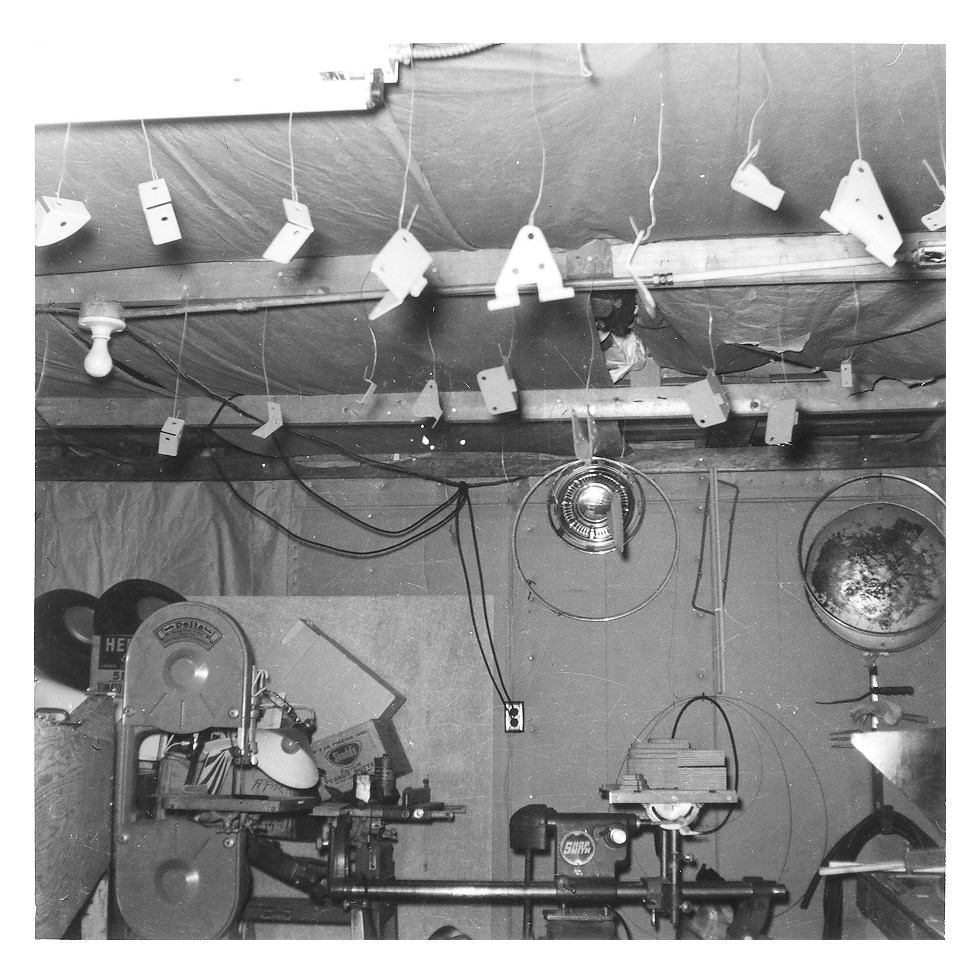
Dennis: The gear legs are made with 4 layers of fir glued and clamped together. The boards are wider than the gear legs and the final shape is cut out with the band saw. The boards need to fit together snugly at the joint. It takes a lot of clamps and a couple 4" wide boards to clamp all this together while it dries. The final shape is laid out on the legs and cut out with the band saw. The edges of the legs are rounded to form a somewhat streamlined shape using files, etc. It's an incredibly strong landing gear.
Subscribe to:
Posts (Atom)