Showing posts with label Tail Surfaces. Show all posts
Sunday, November 25, 2018
Rudder Stops
To keep the rudder from moving so far that it hits the elevator, you need stops on the rudder cable. Pete designed a simple stop using a split piece of dowel with a Nicopress sleeve crimped on the rudder cable.
The block just bumps up against the bulkhead and keeps the Nicopress sleeve from wearing through the plywood on the bulkhead.
That worked fine but the cable sawed a slot in the plywood over time. To stop more wear I created some Nylon cable guides which stick out through the bulkhead.
I wanted the stop to hit solid wood, not the end of the cable guide. If the cable guide moved the stop position would change and the rudder hit the elevator.
I made these blocks from 3/4" plywood to cover the ends of the cable guides. That way the stops again hit solid wood. The blocks are screwed to the bulkhead to keep them in position.
The screw holes are located so they only go through the plywood gusset not the structural members. I clamped them in place to drill one hole, install the screw and stop nut, then drill the second hole.
I lost the original stops so I made some new ones from a piece of 1" oak dowel. The hole center was located, then used to align the table on the Shop-Smith. I started the hole with a 1/8" center drill, then drilled to depth with a regular twist drill.
A stop was clamped on the bandsaw to get a nice groove for the safety wire by spinning the dowel. To make this easier I didn't cut the blocks from the ends of the dowel until the grooves were cut. I added one more grove at the end where the Nicopress sleeve hits the block.
A centerline was drawn around the block to use as a guide sawing the block in half.
I started sawing at each corner than worked to connect the corners. The cuts on the long side were slow but it worked fine.
With them cut in half I clamped each set back together then re-drilled the holes so they would fit nicely on the cable.
You can see the saw blade wandered slightly but the pairs fit together and fit nicely on the cable.
I only varnished the outside, so the pairs would fit together better. I need to put the tail surfaces back on before I can install these and crimp the sleeve in the correct position.
I am running out of little things to do.
Labels:
Controls,
Tail Surfaces
Wednesday, February 24, 2016
1997 - Painting the Fuselage and Tail
The rudder looks blue in this picture but it's silver (aluminum) dope. The bad thing about old film photos was that you didn't know it came out badly until it was too late to retake the picture. Digital pictures do have some advantages. The colors Red, White, Blue, and Black do not have aluminum pigment in them so they need an aluminum base. I wanted to see how the finish would look in WWI so I only put on the coats as they did back then. If I were doing this again I would shoot silver dope before doing any of the colors. It was hard to avoid gaps between colors, and thin areas from brushing inconsistencies.
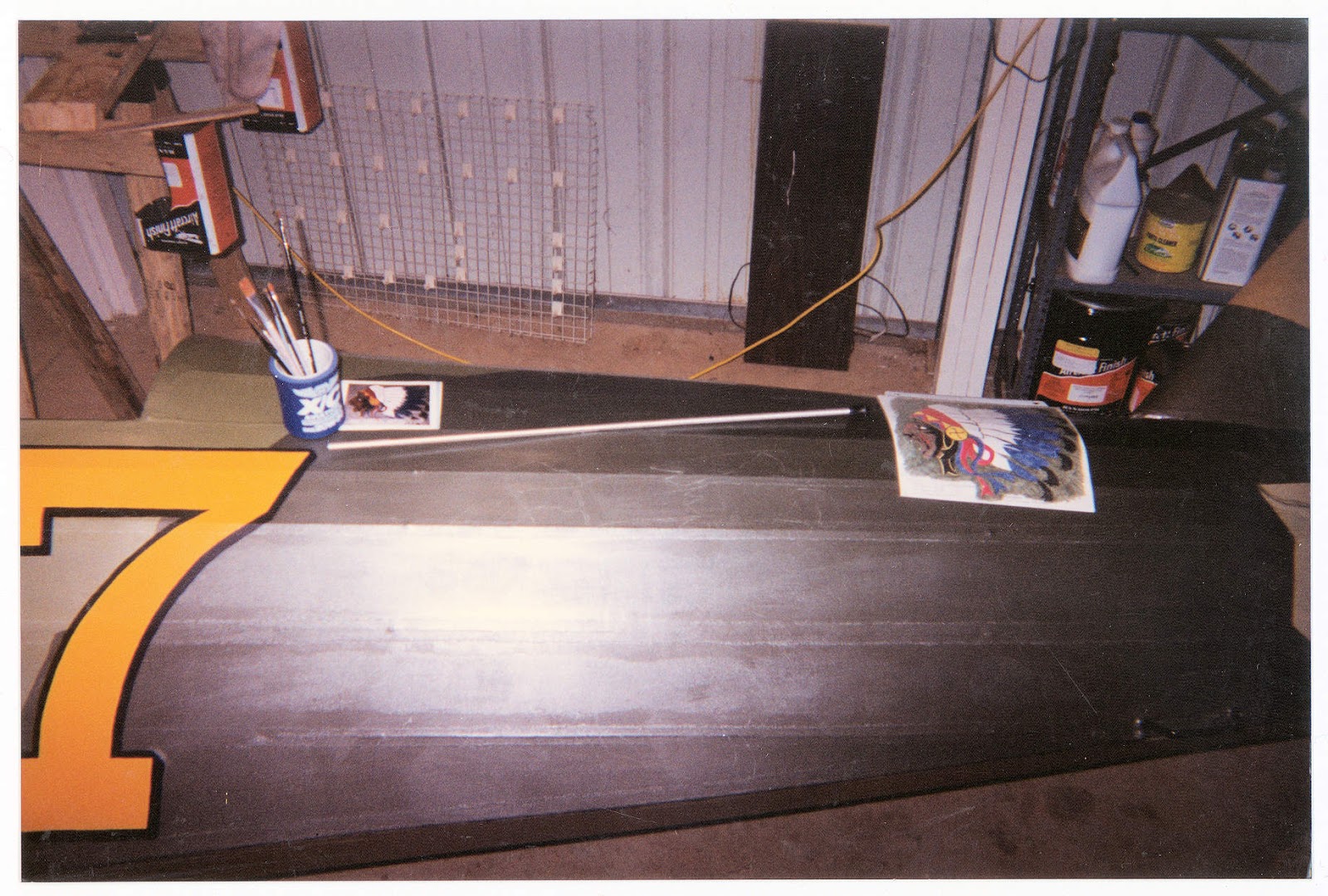
The colors were brushed on starting with the lightest color to the darkest color. That way the dark colors can overlap the lighter colors. The tail surfaces are setting on saw horses behind the fuselage. The tail colors are still part of the Kellner pattern. Each color was applied to all parts then the next color in that order.
The fonts used on the tail were based on photos of SPAD planes. In Aviation and Aeronautical Engineering magazine, November 1, 1919 pg. 298, there was an article by Randolph Hall which explained the loads P.C. and P.U.
The loads P.U. and P.C. are given in kilograms.
P.C. is Poid Combustible, Weight of Combustible fuel. 50kg = 110lb = 18.3 Gallons (I've since made the tank smaller, about 14 Gallons)
P.U. is Poid Utile, Weight Useful, Pilot, Ammunition, Equipment 125kg = 275lb.
The markings and insignia were painted on using the normal tools of sign painting except the colored paints are dope instead of normal sign paints.
A pounce pattern was used to chalk a faint outline on the fuselage. It's like paint by numbers, you just paint inside the faint chalk lines of dots. The chalk holes are poked in the pounce pattern with a star wheel. A pounce bag (filled with chalk dust) is used to dust chalk through the holes.
The pattern helps make both sides the same.
They really came out well for a first attempt at sign painting.
Labels:
Fuselage,
Paint,
SPAD,
Tail Surfaces
Saturday, February 13, 2016
1996 - New Fabric on Fuselage and Tail
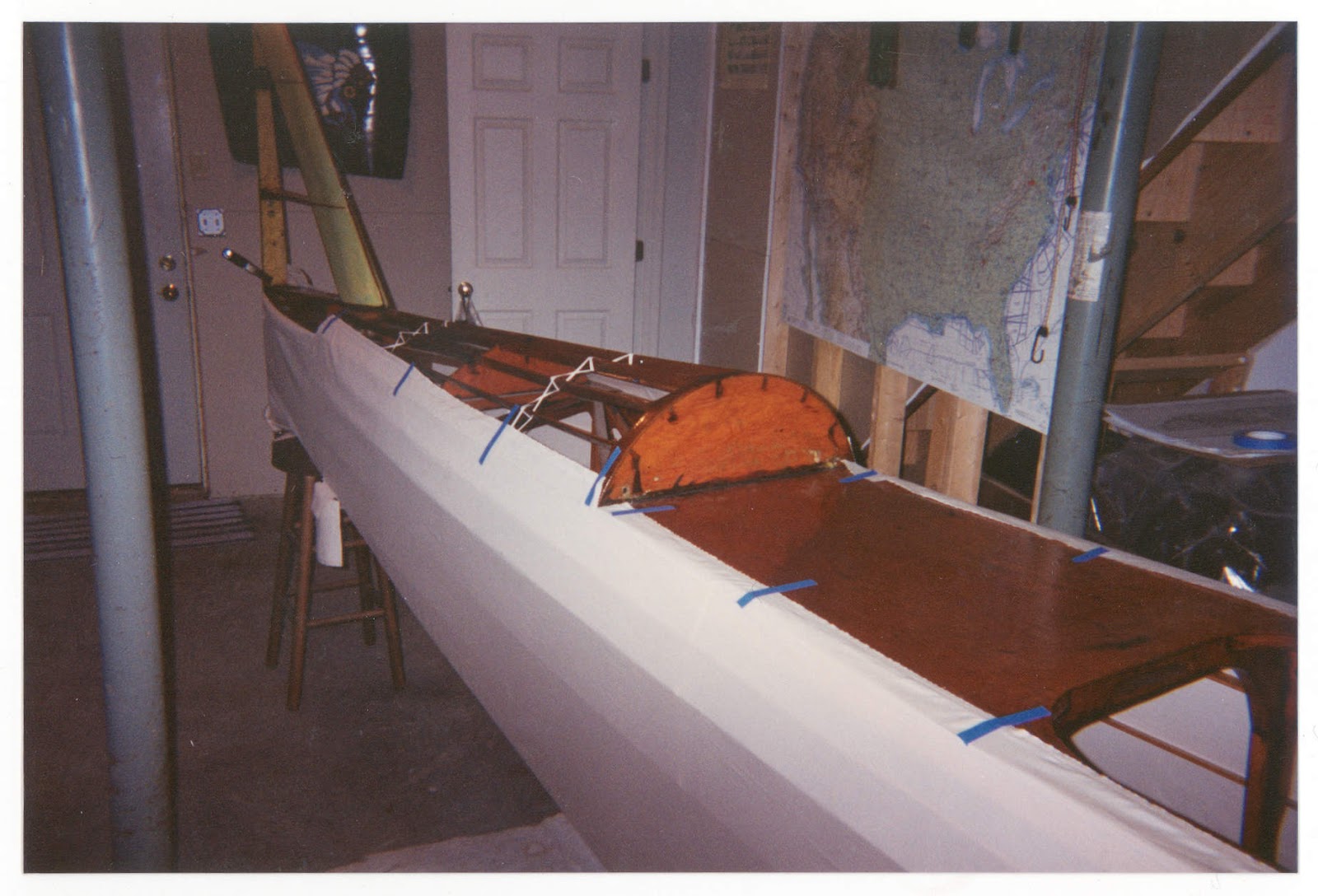
I wanted a more authentic WWI look to the plane so I decided to use Grade A Cotton to cover the fuselage and tail. As part of the WWI thing I decided to sew an envelope for the fuselage like on the SPADs. When we were stationed in Japan in the 60's Patricia and I borrowed the neighbors sewing machine and made envelopes for an L-5A Stinson
The fuselage was placed on each side and each side panel was cut to fit with a little excess and then taped snug to the side.
The turtle deck piece was cut to fit and pinned to the sides.
With the fuselage upside down the bottom was fitted and pinned to the sides.
The cutout in the stringers for the lower wing took a little extra work to fit.
When you take it all back off you find out how big of an opening you need along one of the longeron seams to slide it over the fuselage. The opening gets baseball stitched closed once the envelope is back on the fuselage. Once the sewn envelope is secured to the fuselage and the seam closed cotton gets slightly shrunk tight with a light mist of water.
In 1996 I moved the Cabin WACO to an end hangar with a nice space for a workshop. I built a platform for storage above and a nice lighted work space below. Much better than doing dope work in the house.
The fin was covered as a separate piece after the fuselage so the top of the fuselage sides could be joined to keep it held down tight to the fairing. The slight gap between the fuselage and fin is covered with tapes.
I wanted frayed edges on the tapes instead of pinked so I tore strips of fabric and sat fraying them in the evenings while watching TV. I then rolled them up so they were easy to work with when installing them. I frayed about 3/16" on each side. It really was easy. I like the look better than pinked tapes. The edges sand down nicely.
I wanted more finished looking gap fillers on the tail hinges than the "Z" strip Pete used. I took 2 strips of fabric and sewed them together to make an "X" with 2 seams 1/4" apart in the center. This was used between the hinges.
For the hinges I did the same thing but the gap was sewn wide enough for a 1/4" bolt to slide easily into the pocket. These pieces were installed loosely on the bolts as the the hinges were assembled. The ends were then trimmed to the guide lines drawn on the tail surfaces. These same guide lines were used to trim the gap fillers to a reasonably neat line. The thickness of the tail surfaces varies from root to tip. It was a bit of work but I like the look.
Labels:
Covering,
Fuselage,
Tail Surfaces
Sunday, February 7, 2016
1995 - 1996 Fuselage and Tail Surface Repairs
The engine, gear, center section and tail surfaces were removed to get the plane in the basement. The next task was to remove everything and tag it all for future repair and re-installation. Lots of pictures will help you remember how and where everything goes when putting it back together.
All of the steel fittings were sand blasted and repainted with Zinc-Chromate and Enamel. Most of the bolts were very rusty and all were replaced with new.
When we built the plane Epoxy varnish did not exist. Regular Spar varnish is destroyed by the solvents in dope, etc. The Spar varnish on things like rib cap strips can be protected by applying cellophane tape. Larger areas were just not varnished. They were coated with dope but it does not protect like varnish. The plywood on the small sub-fin, where the tail wheel spring is mounted, was badly water damaged and needed replacement. Otherwise the wood was all in good shape. All the wood got re-varnished with Epoxy varnish used anywhere the fabric would touch.
All of the aluminum leading edges were again in sad condition despite using harder aluminum. I decided to use an idea which was used on the Biplane leading edge tips, i.e. Styrofoam.
I made cardboard patterns to fit in each lead edge bay. The patterns were transferred to the 1" Styrofoam sheet with some extra, double line, to allow for the leading edge wood strip in front of the pattern.
The blocks were trimmed a little to start shaping the leading edge and then glued in place with construction glue for Styrofoam. Some glue will dissolve the stuff.
The fuselage was then turned upside down and covered to control the dust while sanding the foam to shape. It's easy to work with you just need a respirator, lots of dust.
The same process was done for each of the stabilizers using 2" Styrofoam.
The foam was varnished with Spar varnish and then Epoxy varnish. The Epoxy varnish will melt the foam, the Spar varnish does not. I thought the Epoxy varnish would protect the foam. It does not. I found, after I took these pictures, that I needed a better vapor barrier. I used aluminum duct tape, not the cheap cloth stuff. Just overlap the strips 1/4" - 1/2" and it works great. The result is much less fragile than aluminum.
With all the fittings back in the fuselage and the hinges reinstalled on the tail surfaces everything is ready for fabric,
All of the steel fittings were sand blasted and repainted with Zinc-Chromate and Enamel. Most of the bolts were very rusty and all were replaced with new.
When we built the plane Epoxy varnish did not exist. Regular Spar varnish is destroyed by the solvents in dope, etc. The Spar varnish on things like rib cap strips can be protected by applying cellophane tape. Larger areas were just not varnished. They were coated with dope but it does not protect like varnish. The plywood on the small sub-fin, where the tail wheel spring is mounted, was badly water damaged and needed replacement. Otherwise the wood was all in good shape. All the wood got re-varnished with Epoxy varnish used anywhere the fabric would touch.
All of the aluminum leading edges were again in sad condition despite using harder aluminum. I decided to use an idea which was used on the Biplane leading edge tips, i.e. Styrofoam.
I made cardboard patterns to fit in each lead edge bay. The patterns were transferred to the 1" Styrofoam sheet with some extra, double line, to allow for the leading edge wood strip in front of the pattern.
The blocks were trimmed a little to start shaping the leading edge and then glued in place with construction glue for Styrofoam. Some glue will dissolve the stuff.
The fuselage was then turned upside down and covered to control the dust while sanding the foam to shape. It's easy to work with you just need a respirator, lots of dust.
The same process was done for each of the stabilizers using 2" Styrofoam.
The foam was varnished with Spar varnish and then Epoxy varnish. The Epoxy varnish will melt the foam, the Spar varnish does not. I thought the Epoxy varnish would protect the foam. It does not. I found, after I took these pictures, that I needed a better vapor barrier. I used aluminum duct tape, not the cheap cloth stuff. Just overlap the strips 1/4" - 1/2" and it works great. The result is much less fragile than aluminum.
With all the fittings back in the fuselage and the hinges reinstalled on the tail surfaces everything is ready for fabric,
Labels:
Fuselage,
Repairs,
Tail Surfaces
Thursday, December 29, 2011
Covering The Fuselage and Tail - May 1965
Dennis: In 1965 Razorback was the hot fabric for covering. In May of 1965 Stits (now Poly Fiber) had just issued the first copy of their covering manual. Razorback was a fiberglass fabric which was impregnated so dope would stick to it. The important advantages were it was a lifetime fabric and the fabric would not burn, the dope would though. The disadvantage was the price. I also think it was heavier. The dope could be rejuvenated if you didn't cover it with enamel, no polyurethane back then. As with Poly Fiber seams could be made with just overlapping the fabric for a very strong joint. We got enough fabric to do the fuselage and tail for free by putting on a demonstration at a Chapter meeting. I've since also used Grade A cotton, Ceconite, and Poly Fiber. I'll choose Poly Fiber any day.
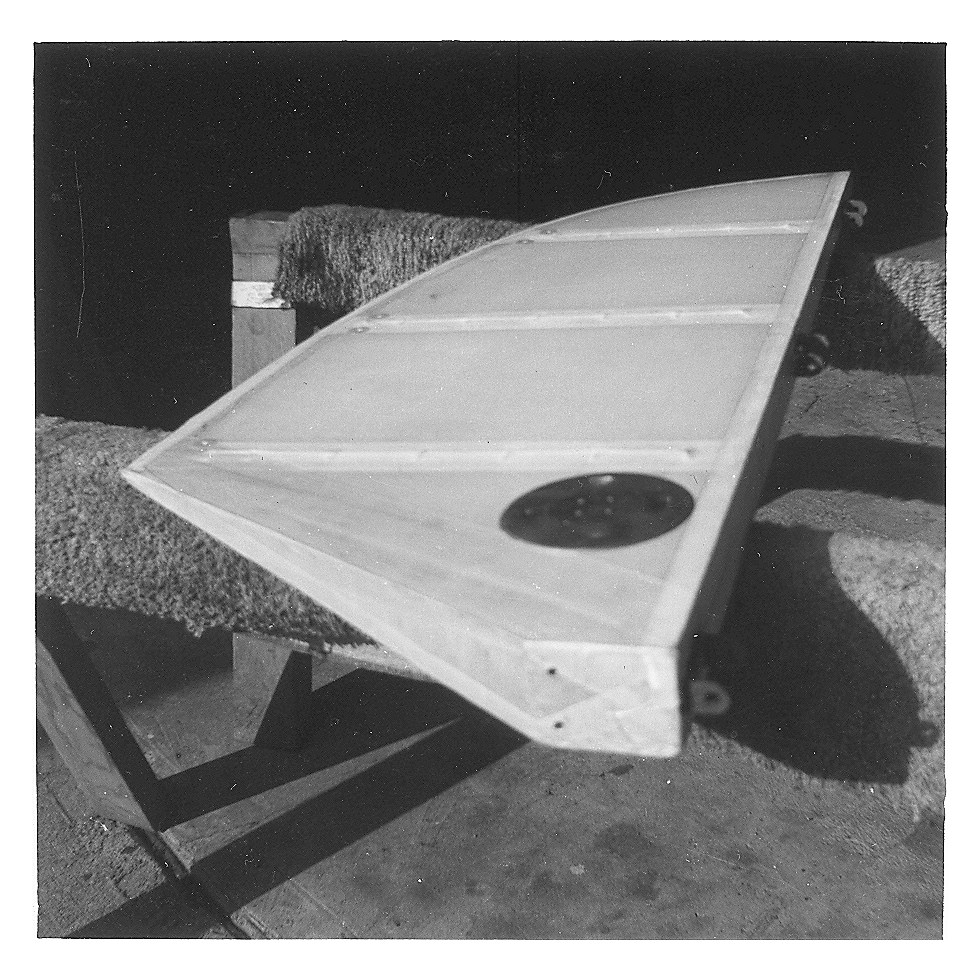
For our demo we started with the tail surfaces. You apply the fabric smug, no shrinking. The fabric is pulled up tight with the dope, which by the way just keeps on shrinking.
After the first coat of Dope the ribs are stitched and tapes applied just like doing cotton but with RazorBack tapes.
The top and bottom of the fuselage were covered first and the sides applied to form the needed overlap.
We didn't have quite enough to finish the rudder. At this point everything but the rudder is doped and taped.
Ready for the engine.
For our demo we started with the tail surfaces. You apply the fabric smug, no shrinking. The fabric is pulled up tight with the dope, which by the way just keeps on shrinking.
After the first coat of Dope the ribs are stitched and tapes applied just like doing cotton but with RazorBack tapes.
The top and bottom of the fuselage were covered first and the sides applied to form the needed overlap.
We didn't have quite enough to finish the rudder. At this point everything but the rudder is doped and taped.
Ready for the engine.
Labels:
Covering,
Fuselage,
Tail Surfaces
Subscribe to:
Posts (Atom)